

Float Glass Glass
Glass Manufacturing Process: From Raw Materials to Finished Product

In short
We touch glass hundreds of times a day, yet rarely think about how it’s created. The manufacturing journey from raw materials to engineered performance, explains why glass can be both beautifully transparent and remarkably strong.
We touch glass hundreds of times a day, yet rarely think about how it’s created. The manufacturing journey from raw materials to engineered performance, explains why glass can be both beautifully transparent and remarkably strong.
Behind each seemingly simple sheet is a tightly controlled industrial glass production process step by step, turning raw sand and minerals into high‑performance glass for construction, automotive, and industrial use.
Introduction: Understanding the Glass Manufacturing Process
For architects, builders, and product designers, glass is no longer just a transparent filler. It is a structural, energy‑efficient, and safety‑critical component. That is why a clear grasp of how glass is made is essential when specifying materials for façades, windows, interior partitions, vehicles, and appliances.
Cutting edge technology at TPRS Glass combine advanced furnaces, automation, and specialised post‑processing to take the glass manufacturing process far beyond the simple “melt and pour” image many people have. High‑quality glass must be consistent, safe, and tailored to each application from a hospital ICU window to a frameless balcony railing.
What Is Glass Made Of? Raw Materials Used in Glass Manufacturing
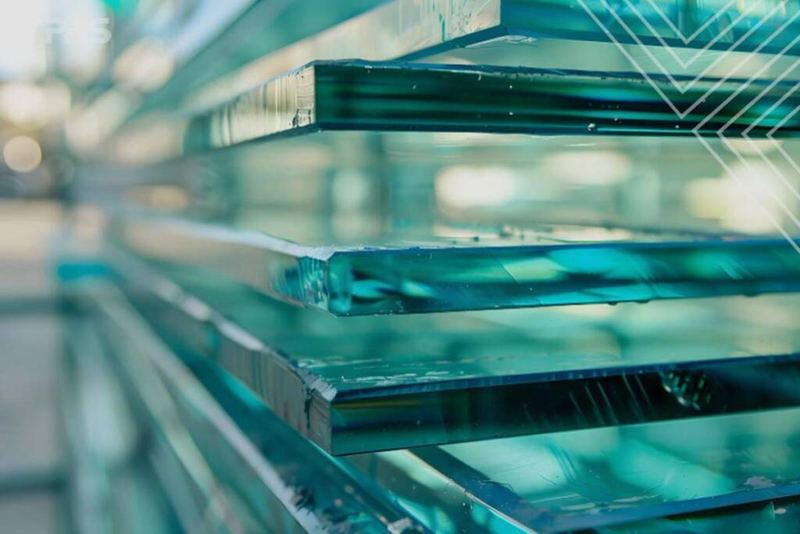
Most architectural glass today is soda‑lime glass. Despite the name, it is not complex in terms of ingredients; the sophistication lies in the purity and control of each component.
The main raw materials used in glass manufacturing are:
- Silica sand – the backbone of the mixture; it provides the basic glass network.
- Soda ash (sodium carbonate) – lowers the melting temperature so the batch can be processed economically.
- Limestone (calcium carbonate) – stabilises the glass and improves durability.
- Cullet (recycled glass) – often 20–50% of the batch in modern plants; it melts more easily and reduces energy use.
- Additives and colourants – metal oxides and other compounds to adjust colour, UV absorption, thermal expansion, or special properties.
Getting the materials used to make glass clean and correctly graded is just as important as any later processing step. Impurities or inconsistent grain sizes can cause bubbles, stones, and other defects that show up in the finished sheet.
Step‑by‑Step Glass Manufacturing Process Explained
Although there are many product variations, the core glass manufacturing steps in an industrial plant follow a logical sequence:
- Batch preparation and mixing
- Melting in high‑temperature furnaces
- Refining and homogenisation of the molten glass
- Forming or shaping (for example, the float glass manufacturing process)
- Annealing (controlled cooling)
- Cutting and edge finishing
- Additional glass processing methods such as tempering, lamination, and coating
- Quality control, finishing, and packaging
The rest of this guide walks through the glass production process step by step, using flat architectural glass as the main example.
Batch Preparation: Mixing Raw Materials for Glass Production
Everything begins in the batch house. Here, electronic scales and conveyors handle the glass batch preparation, accurately weighing silica sand, soda ash, limestone, cullet, and additives.
Key points in this stage:
- Proportioning: Each glass recipe has tight tolerances. Even small deviations can change viscosity, colour, or thermal behaviour.
- Homogeneous mixing: The goal is a uniform blend so every shovel of batch that feeds the furnace is identical.
- Quality control: Samples are regularly checked for moisture, contamination, and grain size. Magnet systems remove any stray metal fragments.
For a processor like TPRS, consistent batch quality is the foundation for high‑performance architectural and automotive glass later in the chain.
Melting Process: Turning Raw Materials into Molten Glass
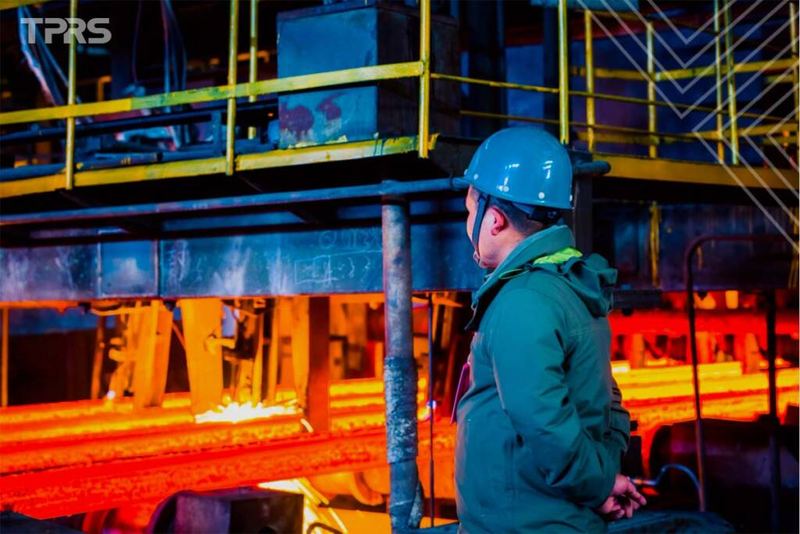
The mixed batch is fed continuously into large furnaces – massive refractory‑lined structures that run 24/7 for years at a time. In a typical industrial plant, the glass melting process happens at temperatures around 1,500–1,600 °C.
Two main furnace concepts dominate the industrial glass manufacturing process:
- Tank furnaces: Large, continuous furnaces used for flat glass and container glass. Batch and cullet are added at one end; molten glass is withdrawn at the other.
- Pot furnaces: Smaller units for specialty compositions or lower volumes.
Efficient glass furnace operation focuses on:
- Maximising heat transfer to the batch while reducing fuel consumption.
- Controlling atmosphere and temperature profiles so the raw materials fully melt without attacking the furnace lining.
- Using cullet to lower energy use and support more sustainable glass manufacturing.
At the end of this stage, the raw mixture has become a viscous, glowing liquid ready for refining and forming.
Refining and Homogenisation of Molten Glass
Freshly melted glass contains bubbles and unmelted grains that would ruin optical quality. The glass refining process removes these imperfections.
Refining and homogenisation involve:
- Holding the molten glass in a deeper section of the furnace so bubbles have time to rise and burst.
- Adjusting temperature and stirring to even out composition and temperature gradients, ensuring molten glass homogenization.
- Sometimes adding refining agents that react with trapped gases and help them escape.
The goal is a clean, uniform melt with stable viscosity. This is particularly important for float glass lines such as TPRS partners use, where any variation can show up as distortion or streaks in the finished sheet.
Forming Process: Shaping Molten Glass into Sheets or Products
Once refined, the glass moves to the forming zone. Here, the glass forming process converts the liquid stream into usable shapes.
Float Glass Manufacturing Process
For architectural and automotive panes, the standard is the float glass manufacturing process. A continuous ribbon of molten glass flows onto a bath of molten tin. Because glass floats on tin and naturally levels out, this produces an extremely flat, parallel sheet.
In the float bath:
- Temperature gradually decreases from over 1,000 °C to around 600 °C.
- Width, thickness, and speed are controlled by ceramic rollers and line settings.
- Surface quality is high because the glass is not touching solid rollers while still very soft.
Other Glass Shaping Methods
Besides float, the glass shaping methods used across the industry include:
- Blowing – for bottles, bulbs, and hollowware.
- Pressing or press‑and‑blow – for jars and tableware.
- Drawing and rolling – for patterned or wired glass.
- Moulding and slumping – for curved and specialty pieces.
TPRS then takes float glass and further customises it through advanced glass processing methods such as digital printing, tempering, and lamination to meet specific project requirements.
Annealing Process: Controlled Cooling for Strength and Stability
Freshly formed glass contains internal stresses because the surface cools faster than the interior. If left untreated, it could crack spontaneously. The solution is the glass annealing process.
In an annealing lehr:
- The glass ribbon or product passes through a long, temperature‑controlled tunnel.
- It is reheated slightly, then cooled very gradually according to a defined profile.
- This controlled cooling of glass allows internal stresses to relax and equalise.
Correct annealing is critical. Well‑annealed glass is stable during cutting, grinding, and later thermal treatments. Poorly annealed glass may shatter unexpectedly or warp during processing.
Cutting and Edge Processing of Glass
Once annealed and cooled to room temperature, the continuous glass ribbon is cut into stock sheets and then into customer dimensions.
The core glass cutting process typically involves:
- Score and break: A tungsten carbide or diamond wheel makes a shallow score; controlled bending breaks the glass along this line.
- CNC cutting: For shapes and holes, automated tables and water‑jet systems are used.
After cutting, the glass often goes through glass edge polishing and grinding:
- Seamed edges – simple arris to remove sharpness.
- Flat‑polished or pencil‑polished edges – used for visible edges in interior partitions, railings, and furniture.
- Mitred or bevelled edges – for decorative work and mirrors.
High‑quality edgework is essential to reduce breakage, improve handling safety, and prepare glass for tempering or lamination.
Glass Processing Methods for Different Applications
The basic annealed sheet is just the middle of the story. Downstream glass processing methods turn it into safety, energy‑efficient, or decorative products tuned for particular uses.
Tempered Glass Manufacturing
In tempering:
- Cut glass is heated to around 600–650 °C and then cooled rapidly with high‑pressure air jets.
- The surface goes into compression while the core is in tension, increasing strength several times over.
- When broken, it fragments into small, relatively blunt pieces.
This tempered glass manufacturing route produces the safety glass used in doors, partitions, shower enclosures, balustrades, and automotive side windows.
Laminated Glass Process
For laminated glass:
- Two or more sheets are assembled with a polymer interlayer, usually PVB or EVA.
- The “sandwich” passes through nip rollers to remove air, then through an autoclave where heat and pressure bond the stack.
- The result is a panel that holds together after breakage and can provide acoustic damping and UV control.
This laminated glass process is vital for windshields, skylights, canopies, and many structural and security applications.
Coatings, Insulation, and Printing
Additional treatments include:
- Soft‑coat and hard‑coat Low‑E layers for thermal performance.
- Solar‑control and reflective coatings for façade optimization.
- Insulated glass units (IGUs) combining two or more lites with a sealed cavity.
- Digital ceramic printing, used by TPRS Innovink, to add permanent graphics, patterns, and branding directly onto the glass surface.
Each of these steps builds on the core glass manufacturing process, tailoring the same base material for very different final roles.
Quality Control and Inspection in Glass Manufacturing
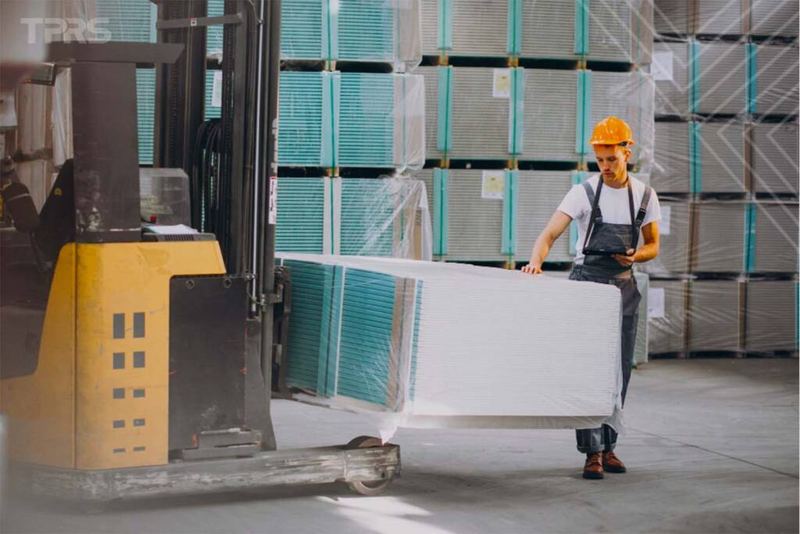
A modern plant invests heavily in the glass quality control process. Defective glass is not just unattractive; it can be unsafe or cause major warranty issues.
Typical glass inspection methods include:
- Online optical scanners to detect bubbles, stones, inclusions, scratches, and distortion on the moving ribbon.
- Thickness, flatness, and bow measurements using laser systems.
- Fragmentation tests, impact tests, and roller‑wave checks for tempered and heat‑treated glass.
- Lamination adhesion and delamination checks for laminated units.
Non‑conforming pieces are rejected or recycled as cullet, feeding back into the furnace to close the loop.
Finishing and Packaging of Glass Products
Once glass has passed inspection, it moves to the final glass finishing process. Depending on the product, this can include:
- Cleaning and protective film application.
- Drilling, notching, or hardware preparation for fittings.
- Final labelling with product codes, batch numbers, standards, and installation instructions.
For shipment, careful glass packaging methods protect the sheets:
- Vertical A‑frames or stillages with timber and rubber supports.
- Corner and edge protectors to avoid chipping in transit.
- Moisture‑resistant wrapping and strapping for international transport.
Given the fragility and weight of glass, good packaging is as important as any upstream step in keeping products safe until installation.
Environmental Considerations in Glass Manufacturing
Glass can be an inherently sustainable material: it is fully recyclable and, when used well, helps buildings save energy. The challenge is that the glass manufacturing process itself is energy‑intensive.
Key focus areas for sustainable glass manufacturing include:
- High cullet ratios: Using more recycled glass lowers the melting temperature and cuts fuel use and CO₂ emissions.
- Efficient burners and heat recovery: Modern furnaces recover waste heat and switch to cleaner fuels where possible.
- Emission control: Filters and scrubbers reduce NOx, SOx, and particulate emissions from stacks.
- Process optimisation: Better insulation, automation, and line design all contribute to more eco‑friendly glass production.
Downstream, energy‑efficient products such as Low‑E IGUs can save many times the energy used to make them over a building’s life.
Applications of Manufactured Glass Across Industries
By the time a pane leaves the factory, the glass manufacturing process may have included a dozen separate steps. The result is a portfolio of products used across many sectors:
- Construction: windows, façades, skylights, canopies, partitions, spandrels, balustrades, floors, and roofs.
- Automotive: windscreens (laminated), side and rear windows (tempered), sunroofs, and mirrors.
- Marine and transport: ship bridges, train windows, and speciality curved units.
- Appliances and electronics: oven doors, refrigerator shelves, control panels, display glass, and protective covers.
Specialist processors like TPRS sit close to the end of this chain—taking high‑quality float glass and adapting it through cutting, tempering, lamination, digital printing, and assembly to match specific glass manufacturing applications in real projects.
Conclusion: From Raw Materials to High‑Performance Glass Products
Seen from the outside, a pane of glass looks simple. In reality, each sheet represents a complete glass manufacturing process that begins with sand and recycled cullet, travels through high‑temperature furnaces and precision float lines, then passes multiple forming, cooling, and processing stages before it reaches a building site.
Understanding this complete glass manufacturing process helps designers, builders, and clients appreciate why product choice, standards, and supplier capability matter so much. When the right raw materials, controlled production, and expert processing come together, the result is finished glass products that are safe, durable, energy‑efficient, and beautiful ready to transform spaces in homes, offices, vehicles, and industries around the world.