


Walk through any business district and one thing stands out immediately, the buildings that catch your eye are almost always the ones wrapped in glass. Used well, architectural glass in commercial buildings does more than make a tower look sleek. It changes how offices, malls, hotels, and hospitals feel on the inside and how valuable they are on the market.
Developers that treat glass as a performance material, rather than just a shiny surface, are the ones getting better comfort scores, lower energy bills, and stronger tenant demand in their commercial portfolios.
Introduction: The Role of Architectural Glass in Commercial Real Estate
In dense cities, most buyers and tenants decide whether they like a building long before they step inside. That is where architectural glass in commercial real estate comes in. A well‑designed façade broadcasts quality and openness, while a dark, closed‑off building often feels dated before anyone sees the floor plan.
Good glass for commercial buildings does three jobs at once: it brings in daylight, reinforces the brand, and makes interiors more pleasant to work or shop in. For a solutions provider like TPRS, architectural glass is treated as part of the building’s performance toolkit, not just a finish.
What Is Architectural Glass? Definition and Commercial Significance
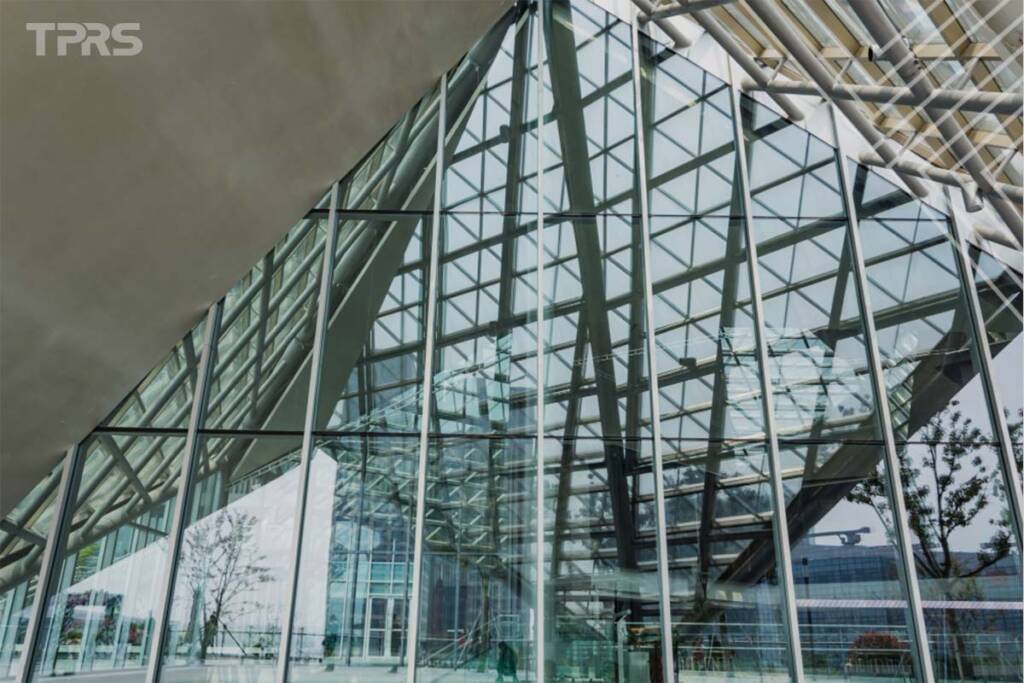
At its core, architectural glass is glass that has been processed and tested specifically for building use. It is thicker, stronger, safer, and more predictable than basic window glass, and it is engineered with specific optical, thermal, and structural properties in mind.
When people talk about commercial architectural glass, they usually mean products such as toughened safety glass, laminated security glass, insulated units, and coated or printed panels. Together, these form a package that can handle wind loads, daily wear, and extreme weather, while still delivering the clarity and elegance designers expect.
Why Architectural Glass Is Essential for Modern Commercial Buildings
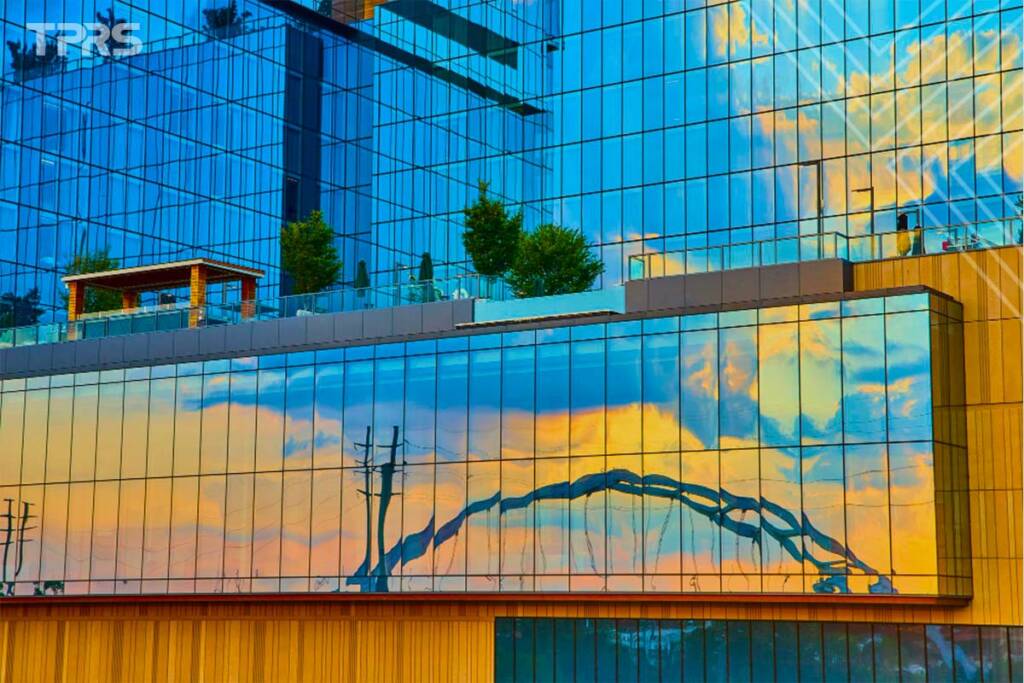
Modern companies want workspaces that feel open, bright, and connected to the city. That is hard to achieve with small punched windows. This is why architectural glass in commercial buildings has become almost non‑negotiable for new office towers, malls, and hotels.
Some of the real‑world benefits of architectural glass are:
- More natural light: Deep floor plates are no longer gloomy; glass façades allow daylight to reach further into the building, which supports wellbeing and productivity.
- Transparency and brand presence: Reception lobbies, retail fronts, and showrooms gain instant visibility from the street.
- Tenant appeal: When prospective tenants tour spaces, bright, glass‑lined floors tend to go to the top of their shortlist, especially in competitive markets.
In other words, modern commercial glass buildings are often easier to lease and hold their value better than their solid‑wall counterparts.
Types of Architectural Glass Used in Commercial Real Estate
Behind every sleek façade is a mix of different commercial building glass types. No single product can tick every box, so architects and façade consultants typically combine several types of architectural glass to get the performance balance right.
Most large projects use a combination of:
- Toughened (tempered) glass
- Laminated safety and security glass
- Insulated glass units (IGUs)
- Low‑E and solar‑control coated glass
- Decorative or digitally printed glass for branding and privacy
Working with a specialist like TPRS helps teams decide which mix of architectural glass in commercial buildings makes sense for their climate, budget, and design intent.
Toughened (Tempered) Glass: Everyday Safety and Strength
Tempered glass is the workhorse of many architectural glass in commercial buildings. It starts as standard float glass and is then reheated and cooled rapidly so the surface goes into compression. This makes it four to five times stronger than ordinary annealed glass of the same thickness.
For tempered glass for commercial buildings, the key advantages are:
- It withstands high wind loads and day‑to‑day bumps in busy areas like lobbies and corridors.
- When it breaks, it crumbles into small, blunt fragments rather than sharp shards, which is why it is widely used as safety glass for offices and public spaces.
Tempered glass is often used for doors, handrails, canopies, and as part of curtain walls and structural glazing systems.
Laminated Glass: Security and Acoustic Comfort
Where fall protection, security, or noise control is a concern, laminated glass takes the lead. It consists of two or more glass plies bonded together with a plastic interlayer, usually PVB.
In architectural glass in commercial buildings, laminated architectural glass is chosen because:
- It stays in place after impact. Even if both plies crack, the interlayer holds the pieces together, which is crucial for overhead glazing, balustrades, and high‑level façades.
- It can be designed as acoustic glass for commercial buildings, using special interlayers to cut traffic and crowd noise in offices, hotels, and hospitals.
For developers, laminates offer peace of mind: one product addresses safety, security, and comfort at the same time.
Insulated Glass Units (IGUs): The Backbone of Energy Efficiency
Insulated glass units are the quiet heroes of energy efficient architectural glass design. An IGU typically pairs two panes of glass with a sealed air or gas space between them. This gap acts as a barrier to heat flow.
In commercial projects, insulated glass units for commercial buildings:
- Reduce heat gain in summer and heat loss in winter, taking pressure off HVAC systems and lowering energy bills.
- Improve comfort near windows by avoiding excessively hot or cold interior surfaces.
- Create space for more advanced coatings inside the cavity, further boosting performance.
Most new‑build towers today specify IGUs as standard, making them a staple of architectural glass in commercial buildings that aim for green certifications.
Low‑E and Solar‑Control Glass: Smarter Facades
Low‑emissivity and solar‑control coatings are thin, almost invisible metallic layers applied to the glass surface. They are key tools in modern architectural glass in commercial buildings, especially on large façades.
These products, such as Low‑E glass for commercial buildings and solar control architectural glass, help by:
- Reflecting a significant portion of infrared heat while allowing visible light through, keeping interiors bright yet cooler.
- Reducing glare, particularly on heavily exposed east, west, and south elevations.
- Helping projects hit stringent energy targets and qualify for LEED, IGBC, or GRIHA points as part of green building glass solutions.
TPRS offers high‑performance coated ranges that integrate seamlessly into its architectural systems, giving designers flexibility without sacrificing efficiency.
Where Architectural Glass Shows Up in Commercial Real Estate
Once you start looking, you see architectural glass in commercial buildings almost everywhere:
- Office towers: Full‑height curtain walls, double‑skin façades, meeting‑room partitions, and skylights.
- Retail and malls: Shopfronts, atriums, escalator balustrades, and feature staircases.
- Hotels and hospitality: Guest‑room windows with acoustic and thermal control, statement lobbies, and pool enclosures.
- Hospitals and education: Daylit corridors, internal courtyards, privacy glass in sensitive areas.
Each of these commercial architectural glass applications calls for a slightly different mix of safety, energy performance, and aesthetics; another reason to work with a processor that can customize solutions project by project.
Glass Facades: Giving Commercial Buildings Their Identity
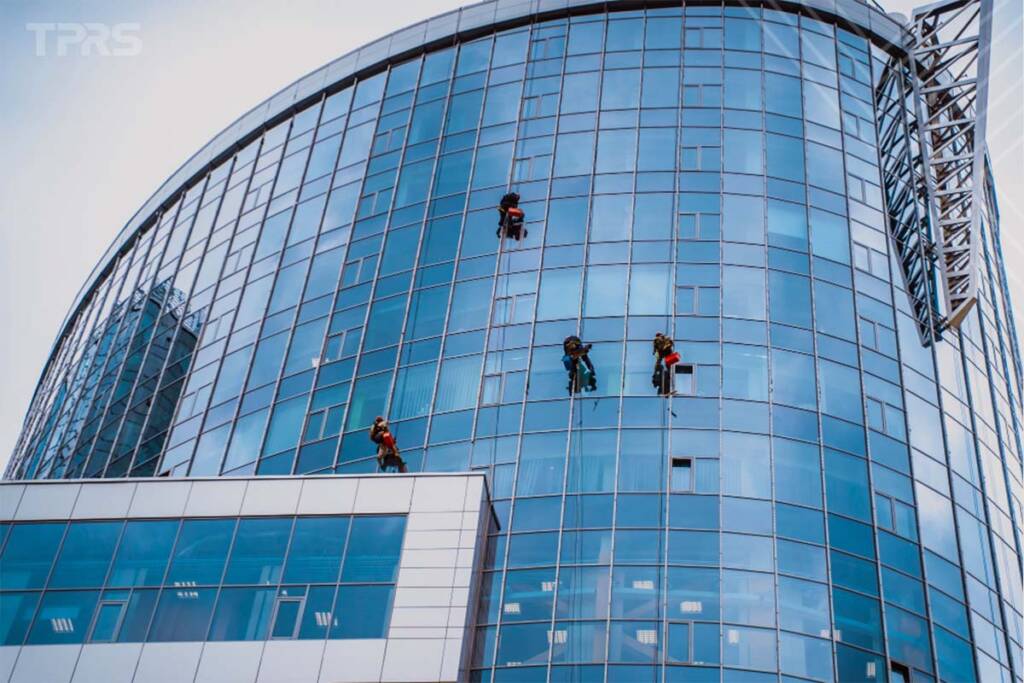
For many projects, the façade is the brand. A well‑executed glass facade for commercial buildings signals transparency, innovation, and openness from a distance.
Modern architectural glass facade systems allow:
- Continuous glass skins with minimal visible framing, often using stick or unitised curtain wall technology.
- Structural glazing, where glass is bonded rather than mechanically clipped, creating smooth surfaces with very clean lines.
- Integration of spandrel panels, shading elements, and printed patterns that add depth and texture.
These systems rely heavily on the performance of architectural glass in commercial buildings to keep interiors comfortable while delivering the bold exterior look clients want.
Safety, Security, and Compliance: Getting Glass Design Right
However attractive a façade looks, architectural glass in commercial buildings must always pass the safety test first. Codes dictate where safety glass is mandatory, how much load balustrades must resist, and what happens during fire or seismic events.
Good practice includes:
- Using tempered or laminated safety glass for commercial buildings in doors, low‑level panels, and any glazing that forms part of a barrier.
- Specifying fire‑rated systems in stair cores, escape routes, and compartment lines as required.
- Ensuring products carry third‑party certifications and meet all commercial building glass safety standards before being approved.
Processors like TPRS invest heavily in testing and quality control so that façade designers can focus on creativity without compromising compliance.
Energy Efficiency and Sustainability: Long‑Term Gains
Energy prices and ESG commitments have pushed architectural glass in commercial buildings into the centre of sustainability conversations. High‑performance glazing can cut cooling and heating loads dramatically, especially in glass‑dominant façades.
With sustainable architectural glass, developers gain:
- Lower operational costs over the life of the asset.
- Better comfort levels at the perimeter, which leads to happier tenants and fewer complaints.
- Stronger positioning when targeting green certifications and environmentally conscious occupiers.
TPRS highlights that combining IGUs, Low‑E coatings, and thoughtful orientation is often the fastest path to meaningful energy savings in glass for commercial real estate projects.
Acoustic Performance: Making Busy Locations Comfortable
Prime sites often come with one downside: noise. Busy roads, transit lines, and dense crowds can make interior spaces stressful unless the façade is designed carefully. Here, architectural glass in commercial buildings plays a major acoustic role.
Using acoustic architectural glass, typically laminated units with sound‑damping interlayers—developers can:
- Reduce outside noise levels significantly in offices, hotels, and clinics.
- Improve speech privacy in meeting rooms and client‑facing areas.
- Turn locations that were once considered “too noisy” into viable, attractive investments.
In many markets, soundproof glass for commercial buildings has become a standard expectation for premium office and hospitality assets.
Design Trends in Architectural Glass for Commercial Properties
The last few years have brought rapid change in modern commercial glass design. Some of the most visible architectural glass trends include:
- Larger panels and slimmer frames for a clean, minimalist look.
- Smart glass and switchable privacy glass in boardrooms, healthcare, and high‑end offices.
- Digital ceramic printing, which TPRS specialises in, allowing custom patterns, gradients, and branding baked directly into the glass surface.
- High‑performance coatings that tune colour, reflection, and solar performance to match both design intent and climate.
These trends show how architectural glass in commercial buildings is evolving from a simple transparent barrier into a high‑tech, multi‑layered design element.
Choosing the Right Architectural Glass for Commercial Projects
With so many options, choosing architectural glass can feel overwhelming. A practical approach is to work backwards from performance and use rather than starting with product names.
Questions developers and architects should ask:
- What are the biggest priorities: energy savings, acoustics, security, or pure aesthetics?
- How do orientation and local climate affect solar gain and glare risk?
- Where do codes require safety glass for commercial buildings or fire‑rated systems?
- What payback period is acceptable for upgrades like energy efficient architectural glass?
Partnering early with a processor like TPRS, which offers end‑to‑end architectural glass solutions, helps teams answer these questions before drawings are locked in.
Conclusion: Architectural Glass as a Strategic Investment
In today’s market, architectural glass in commercial buildings is far more than a visual choice. It influences how a project performs on almost every metric that matters: safety, comfort, energy use, leasing success, and long‑term asset value.
By combining the right mix of tempered, laminated, insulated, and coated products into coherent commercial real estate glass systems, developers can create buildings that not only look impressive on day one, but also stay efficient, comfortable, and desirable for years. With experienced partners like TPRS guiding the process, architectural glass becomes a smart, strategic investment rather than just a line item in the façade budget.