

Automotive Glass Laminated Glass
Glass in Automotive Industry: From Windshields to Smart Vehicles

In short
Imagine a car where the glass does more thinking than some engines used to. Yes, the next big leap in car technology is not under the hood, it is in the glass.
Imagine a car where the glass does more thinking than some engines used to. Yes, the next big leap in car technology is not under the hood, it is in the glass. Glass has always been essential to vehicles, but today it is doing far more than keeping the rain and wind out; glass in automotive industry design now supports safety, comfort, connectivity, and even vehicle intelligence. The more vehicles move toward electrification and autonomy, the more strategic glass in automotive industry decisions become for OEMs and component suppliers.
Introduction: The Growing Role of Glass in the Automotive Industry
Over the last few decades, the role of glass in automotive industry engineering has expanded from basic windshields and side windows to complex systems that integrate sensors, antennas, head‑up displays, and smart shading. As the automotive industry embraces connected, autonomous, and shared mobility, automotive glass technology is increasingly treated as a functional component of the vehicle shell rather than just a transparent fill between pillars.
For manufacturers and processors like TPRS, this shift means higher demands on optical quality, structural performance, acoustic control, and precise curvature, especially for large panoramic windshields and roofs that showcase how advanced glass in automotive industry applications have become.
What Is Automotive Glass? Definition and Industry Overview
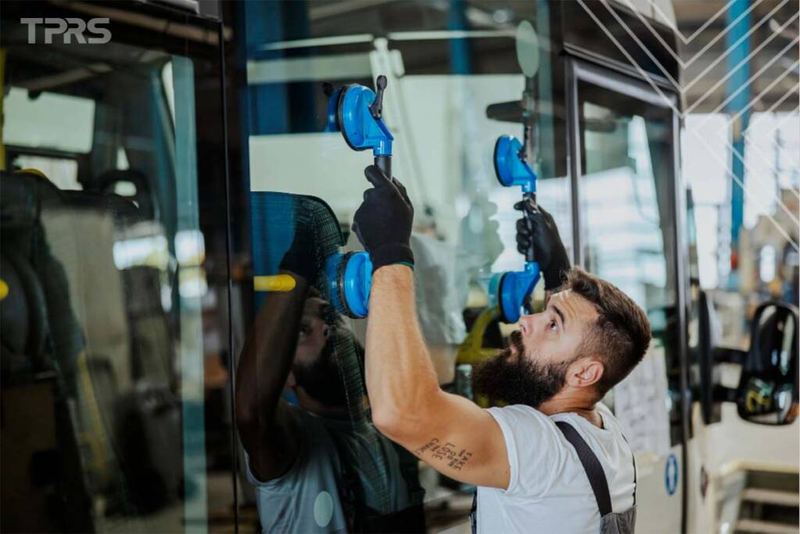
In simple terms, automotive glass is any glazing fitted to a vehicle that meets specific safety, optical, and durability standards for road use. This includes the front windshield, side and rear windows, fixed quarter glasses, sunroofs, and increasingly, glass roofs and encapsulated glazing around pillars; everywhere glass in automotive industry design touches the passenger experience.
The automotive glass meaning goes beyond clarity. Certified car glass must:
- Resist impact and crash loads as part of overall vehicle crashworthiness.
- Maintain visibility under a wide range of lighting and weather conditions.
- Withstand vibration, temperature extremes, and UV exposure over many years.
When people discuss car glass definition, they are really referring to a family of engineered laminates and tempered components that together form a safety‑critical part of the vehicle body and highlight how sophisticated glass in automotive industry engineering has become.
Types of Glass Used in the Automotive Industry
Despite the variety of shapes and coatings, the main types of automotive glass used globally are two soda‑lime safety glass families that dominate automotive glass applications.
- Laminated glass – typically used in windshields and, in premium vehicles, sometimes side windows and panoramic roofs.
- Tempered glass – commonly used for side windows, rear windows, and certain roof panels.
Additional car glass types emerge once these bases are combined with acoustic interlayers, solar‑control coatings, hydrophobic layers, or smart technologies. This layered ecosystem of products shows how glass in automotive industry design keeps evolving to meet new performance targets.
Windshield Glass: Safety, Visibility, and Structural Support

The front windshield glass for cars is one of the most safety‑critical components on any vehicle. Almost all modern windshields use laminated windshield glass, where two glass sheets encapsulate a PVB (polyvinyl butyral) or similar interlayer.
This construction delivers several benefits:
- In an impact, the front windshield glass cracks but the interlayer holds fragments in place, drastically reducing the risk of flying shards and highlighting why laminated designs dominate automotive glass applications.
- The laminated structure contributes to the vehicle’s structural integrity, helping support the roof in roll‑over scenarios.
- It filters UV radiation and, when specified as acoustic glass, significantly cuts down road and wind noise entering the cabin.
TPRS, for example, manufactures laminated automotive glass that complies with standards such as IS 2553 Part 2 and IR 43, ensuring that glass in automotive industry windshields meets stringent safety, optical, and durability requirements.
Side and Rear Window Glass in Vehicles
Most car side window glass and rear windshield glass are made from tempered safety glass. After being cut and formed to shape, these panes are heated and rapidly cooled, creating a compressive surface layer.
Key characteristics of tempered glass in vehicles include:
- Higher impact strength than annealed glass, reducing breakage from everyday use.
- A granular break pattern: if shattered, the glass disintegrates into small, blunt particles rather than long shards.
- Compliance with regulations that require ejection‑mitigating glazing and safe fragmentation behaviour in crashes.
In some luxury models, laminated glass is also used for side windows to improve security and sound insulation, but tempered glass remains the mainstream solution because it balances safety, cost, and emergency egress; another example of how glass in automotive industry choices must weigh multiple priorities.
Safety Glass in Automobiles: Protecting Passengers

Virtually all glazing today counts as safety glass for automobiles. Windshields rely on laminated construction; side and rear windows are typically tempered. Together, these elements are often referred to as automotive safety glass.
This system performs several roles across key automotive glass applications:
- Preventing large shards that might injure occupants in a collision.
- Maintaining a partial barrier so that passengers are less likely to be ejected.
- Supporting airbag deployment, particularly passenger airbags that rely on laminated windshields as a backstop.
Laminated standards such as IS 2553 Part 2 and IR 43, which TPRS tests against, specify impact resistance, optical clarity, UV performance, and long‑term durability for automotive glass, underscoring how tightly regulated glass in automotive industry products have become.
Acoustic and Thermal Performance of Automotive Glass
Modern cabins are quieter and more comfortable largely due to improved glazing. Acoustic automotive glass uses a special sound‑damping interlayer within laminated glass to reduce the transmission of road and wind noise into the interior, improving how glass in automotive industry design shapes the cabin experience.
Benefits include:
- Noticeably lower noise levels at highway speeds, making long drives less fatiguing.
- Better audio experience for conversations, calls, and in‑car entertainment systems.
At the same time, heat insulating car glass using tinted interlayers, infrared‑reflective coatings, and solar‑control glass—helps keep cabins cooler, reducing air‑conditioning loads and improving fuel efficiency or EV range. Many OEMs combine acoustic and thermal features in a single laminated windshield, showing how multifunctional glass in automotive industry solutions have become the norm.
Automotive Glass Manufacturing and Processing Technologies
Producing glass for the automotive industry requires a blend of standard float production and highly specialised finishing. The automotive glass manufacturing process typically involves:
- Forming flat glass on a float line.
- Cutting and shaping using CNC equipment to match precise body apertures.
- Bending or sagging glass over moulds to create 3D curvature for windshields and backlites.
- Car glass processing steps such as tempering (for sidelites and backlites), lamination (for windshields and some roofs), and application of ceramic frits and coatings.
TPRS, for instance, combines precision processing with rigorous viewing and impact tests to ensure laminated and tempered products meet standards while supporting the latest glass in automotive industry trends, from larger windshields to full‑glass roofs.
Smart Glass in Vehicles: The Future of Automotive Design
The next wave of glass in automotive industry innovation is happening in smart and connected glazing. Smart automotive glass includes technologies such as:
- Electrochromic car glass, which darkens or lightens in response to voltage, enabling switchable sunroofs and side windows that replace traditional blinds.
- Heads‑up display windshields, where special PVB stacks and coatings ensure projected information appears clearly without double images or ghosting.
- Integrated antennas, heating elements, and sensor windows embedded in laminated structures to support connectivity and ADAS hardware.
These solutions allow designers to reduce mechanical parts and create cleaner interiors while still giving occupants control over light, privacy, and information; another sign of how central glass in automotive industry innovation has become to vehicle UX.
Automotive Glass for Electric and Autonomous Vehicles
Electric and autonomous vehicles place even higher demands on glazing. Automotive glass for electric vehicles needs to be lightweight, aerodynamically efficient, and highly insulating to minimise HVAC loads and maximise range.
For autonomy, autonomous vehicle glass must:
- Provide optical‑grade surfaces for cameras, LiDAR, and radar sensors to look through without distortion.
- Integrate heating, hydrophobic coatings, and de‑icing systems around sensor zones so that they remain clear in all weather.
- Offer complex shapes for large, panoramic windshields and roof modules that enhance passenger comfort and visibility.
Specialised processors like TPRS, already experienced in digital ceramic printing and laminated standards, are well positioned to produce glass that integrates sensor cut‑outs and printed masks without compromising safety or aesthetics, pushing glass in automotive industry design into a new era.
Repair and Replacement of Automotive Glass
Even with advanced safety and coatings, chips and cracks still occur. In many markets, windshield repair vs replacement decisions depend on the size, location, and type of damage; small chips outside the driver’s direct line of sight may be repairable, but cracks or structural damage generally require full automotive glass replacement.
Key considerations during replacement:
- Using certified glass that matches original specifications for thickness, curvature, and optical quality.
- Ensuring correct adhesive systems and curing times, as the windshield contributes to body stiffness and airbag performance.
- Recalibrating ADAS cameras and sensors attached to the glass, which is now standard practice on many vehicles.
Poor‑quality replacement glass or incorrect installation can compromise safety systems and may fail regulatory inspections, underlining once again how critical glass in automotive industry standards are to real‑world safety.
Compliance Standards and Regulations for Automotive Glass
The glass in automotive industry sector is tightly governed by global and national standards. These automotive glass safety standards cover impact resistance, fragmentation, optical distortion, UV transmission, and marking requirements.
Common regulatory frameworks include:
- ECE R43 in Europe and equivalent rules in many other regions.
- FMVSS 205 in the United States.
- IS 2553 and IR 43 for automotive laminated products in India, which TPRS specifically cites and tests its windshields against.
Certified car glass must carry permanent markings indicating compliance, production date, and manufacturer traceability. Insurers and authorities increasingly check these marks, making adherence to glass in automotive industry regulations a non‑negotiable for OEMs and processors.
Sustainability Trends in Automotive Glass Industry
Sustainability is reshaping the automotive industry, and glass in automotive industry design is part of that transition. Key sustainable automotive glass trends include:
- Higher use of cullet (recycled glass) in float production, reducing energy consumption and CO₂ emissions.
- Development of lighter laminates and thinner glass to lower vehicle mass and improve fuel efficiency or EV range.
- Integration of solar‑control coatings and advanced insulation to reduce air‑conditioning loads and associated emissions.
As a processor focused on sustainability, TPRS emphasises energy‑efficient technologies and long‑lasting laminated products that maintain performance over the vehicle’s life, reducing the need for premature replacement and supporting greener glass in automotive industry lifecycles.
Conclusion: How Automotive Glass Is Shaping the Future of Mobility
From early flat panes to today’s curved, laminated, and intelligent glazing, glass in automotive industry applications have evolved into a critical factor in safety, comfort, and brand identity. Windshields now act as structural members, display surfaces, and acoustic shields; side and rear windows balance safety with egress; and smart automotive glass is emerging as a key enabler of connected, electric, and autonomous mobility.
As vehicles continue to transform, advanced vehicle glass systems will do much more than provide a view of the road, they will help manage energy, protect occupants, support sensors, and define how people experience travel. For OEMs and designers, working with expert processors like TPRS is essential to unlock the full potential of glass in automotive industry innovation and ensure that future vehicles are as safe and sustainable as they are smart.